(Fall, 2015 - McAndrew)
Period 3S TTH - Room A-219 SMC
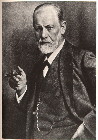
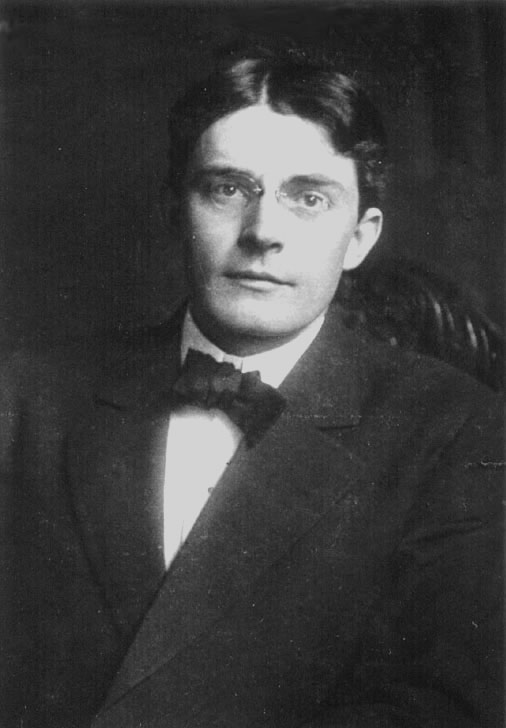
Readings in the History and Systems of Psychology, 2nd Ed. (Brennan, 1998)
Three Psychologies, 6th Ed. (Nye, 2000)
Multiple
Assigned Readings downloadable from this web page
CONTACT INFORMATION: Frank McAndrew, E-131 SMC, Ext. 7525
e-mail: fmcandre@knox.edu.
Psychology Department Web Page
Psychology
Department
Writing Policy
Is there such a thing as the "mind," and if so, how does it relate to the physical body?
How are humans related to other animals?
Is there free will or is human behavior determined?
Can mental events be studied scientifically?
What makes us what we are? Nature or Nurture? Heredity or environment?
What is the best way to study human beings? Objectively or subjectively? Qualitatively or Quantitatively? Looking for general principles of behavior or attempting to understand individuals as persons?
To what extent to we need to understand biology in order to understand human nature?
How rational is human thought and behavior?
Your learning will be assessed by the quality of the written work that you hand in and by your performance in class as measured by poarticipation and quizzes. Every course that you take is designed to help you acquire knowledge and skills. The departmental learning goals & competencies assessed in this course include the following:
1) Understand the basic theoretical approaches and classic empirical findings of psychology
2) Effectively communicate with clear, grammatically correct writing.
Three
Papers:
Paper #1 = 15% of final grade
Paper #2 = 20% of final grade
Paper #3 = 25% of final grade
Weekly Quizzes: 20% of Final Grade
Class
Participation: 20% of final grade.
Attendance will be taken each class. It is not necessary to speak every
day, but meaningful participation on a regular basis throughout the
term will be the basis for the class participation grade.
Thursday, September 10 - Introduction to the course; Introduction to persistent questions in the history of psychology.
Tuesday,
September 15 - Introduction to Classical Roots of Psychology - Readings
#2 & #3 in Brennan (Plato
& Aristotle);
Plato's
"Allegory of the Cave" (Download
the pdf version)
See a video
interpretation of the Allegory of the Cave
done by students at American University
CLICK ON
THE LINK FOR MORE INFORMATION ON THE RELATIONSHIP AMONG
Plato, Aristotle, Christianity, & Knowledge
Thursday, September 17 - Quiz; Lecture on Medieval & Renaissance Roots of Psychology (Readings #4 (St. Augustine) & #5 (St. Thomas Aquinas) in Brennan)
CLICK ON THE LINK FOR MORE INFORMATION ON The Medieval Universe
Tuesday, September 22 - Catch Up Day; Discuss Papers
Wednesday, September 23 - Paper #1 is Due.
Part II: Post-Renaissance Philosophy and the Rise of Modern Systems of Psychology
Thursday, September 24 - Reading #6 in Brennan (Descartes); Quiz
Tuesday, September 29 - Sensationalism & Materialism: (Reading #8 in Brennan (de Condillac)
Thursday, October 1 - Quiz; Empiricism vs. Rationalism: (Readings #9 (Locke) & #11(Kant) in Brennan)
Tuesday, October 6 - Voluntarism & Structuralism: (Reading #12 in Brennan (Wundt))
Thursday, October 8 - Catch-Up
Day
Tuesday, October 13 - Quiz; Functionalism: (Readings #14 (James) & #16( Angell) in Brennan)
Thursday, October 15 - "The
Measurement of Human Abilities;" "Alfred
Binet and the Study of Intelligence"
Tuesday, October 20 - Quiz; Behaviorism: (Readings #20, #22 in Brennan (Watson, Skinner))
Thursday, October 22 -
Behaviorism continued; (Chapter 3 in Nye); "A case history in
scientific method" by Skinner
Monday, October 26 - Paper #2 is Due
Part III: Challenges to the Dominant
Worldviews in Modern Psychology.
Tuesday, October 27 - Quiz; Introduction to the
history of treating mental
illness: (Reading on "Emil
Kraepelin" & "The Divided Self"
by R.D.
Laing)
Thursday, October 29 - Quiz; Psychoanalysis; (Reading #18 (Freud) in Brennan; Chapter 2 in Nye)
Tuesday,
November 3 - Introduction to Third-Force Psychology; "Toward a
Psychology
of Health" by Maslow
Thursday, November 5 - Quiz;
Chapter 4 in Nye; "What it means to
become
a person" by Rogers
Tuesday,
November 10 - The Cognitive Revolution and the Rise of Evolutionary
Psychology;
"The Impact and Promise of the
Cognitive Revolution" by
Sperry;
"Evolutionary Psychology: New
Perspectives on Cognition and
Motivation(pp. 201-205)" by Cosmides & Tooby.
Thursday, November 12 - Discuss papers; Catch-Up Day
Monday, November 16 - Paper #3 is Due
To see copies
of the powerpoints that were
used in the lectures for this course, click on the picture of the
overhead projector.